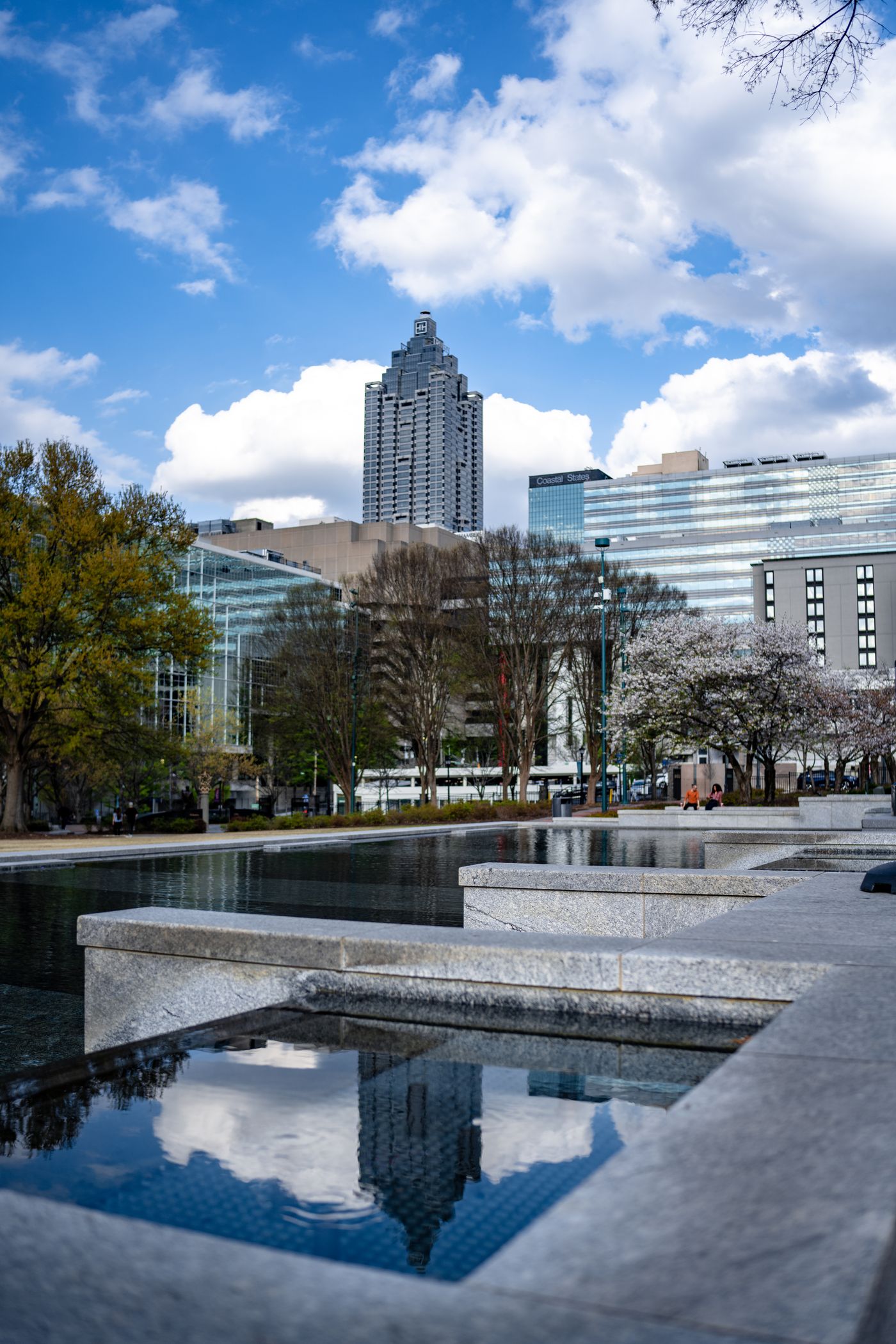
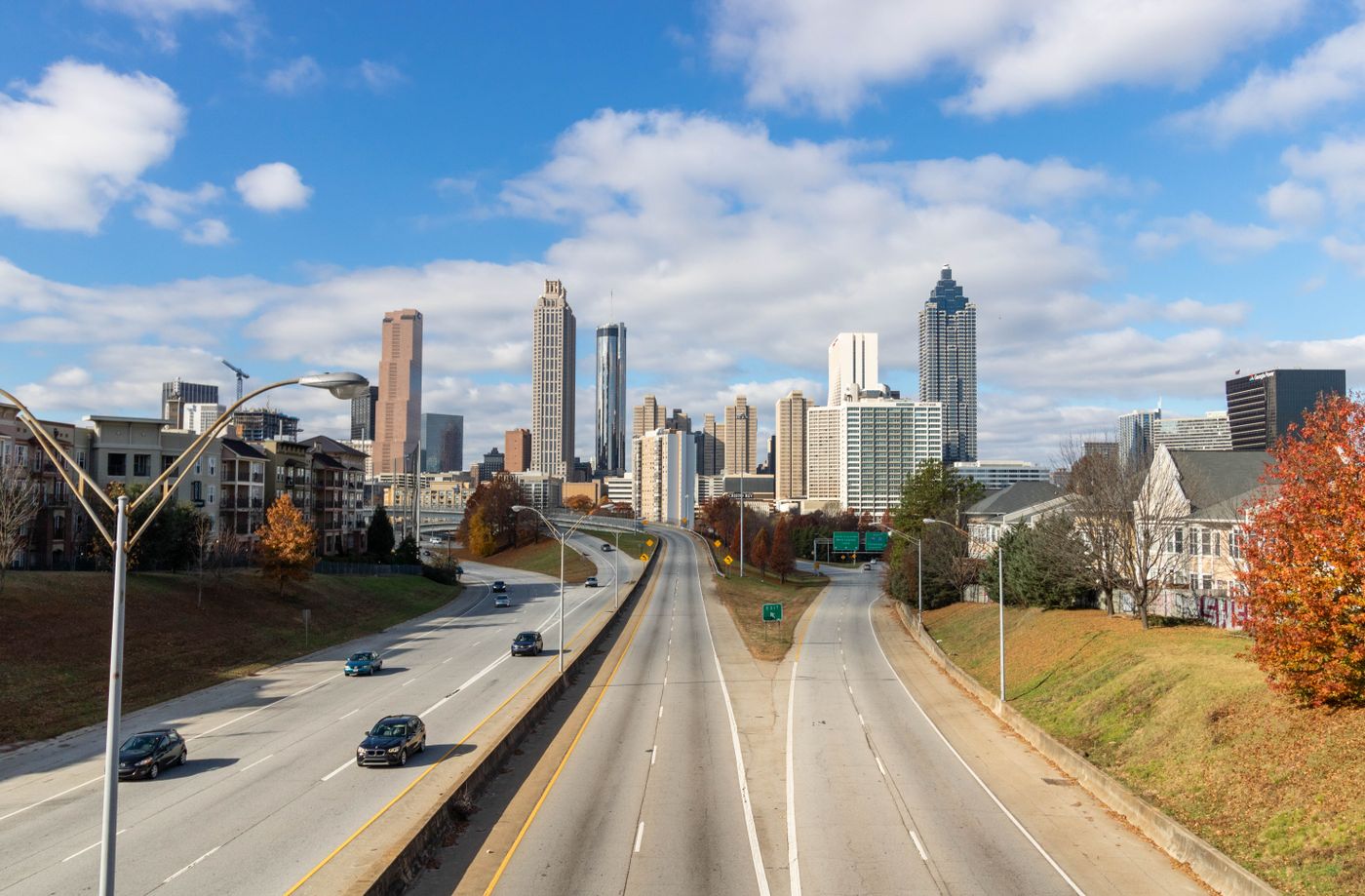
Oakland Cemetery is the city's oldest surviving burial ground, forty-eight acres of Victorian garden cemetery in Grant Park, and it is also the calmest place you can spend an hour in Atlanta. Both things are true at once. You walk in under the brick arch at the main gate, and the traffic noise drops away, and the skyline stands up behind the magnolias and the oaks. It is free, it is open to anyone, and it asks nothing of you except that you keep your voice down and stay on the paths. Go, and go on foot.
Where to walk inside the gates
What Oakland Cemetery actually is
This is a working cemetery, not a park with graves in it. Families still bury their dead here, and plots are still sold, which is the fact that should shape everything about how you behave once you are through the gate. Between those active plots lie the older sections: the Victorian garden cemetery layout of curving paths, family plots ringed with ironwork, obelisks, low walls and marble angels gone grey with age. The planting is heavy and deliberate. Magnolias, oaks, crepe myrtles and camellias crowd the ground, and in the older sections the stones sit half swallowed by ivy. It reads as a garden that happens to contain a city's dead, which is exactly what the nineteenth century designers intended.
The site is older than most of the city around it. It opened in the middle of the nineteenth century, out on what was then the edge of town, and the city grew up and around it until the cemetery became an island of green inside the neighbourhoods. That history is legible on the ground. You can read the waves of the city's past in the names and dates: the early merchants, the Confederate dead, the African American burial grounds, the Jewish sections, the civic figures whose names are now on streets and buildings. The whole thing sits on a low rise, so the ground undulates and the paths wander rather than run straight, which is why it feels larger than its forty-eight acres.
The odd thing is how much of it is not solemn at all. People walk dogs along the outer paths. Joggers cut through. Office workers eat lunch on the benches near the main gate. On a weekday morning you may have whole sections to yourself, with only the sound of the wind in the trees and a leaf blower somewhere in the distance. On a weekend afternoon the paths near the gate carry a steady trickle of visitors with cameras. Both versions exist, and both are the real Oakland. The place survives by being used, so it does not mind you being there. It only asks that you treat the active graves as somebody's family plot, because they are.
Cost, gates and getting in
Entry to the cemetery is free, and no ticket is needed to walk in and wander. The main gate on Oakland Avenue, with the brick arch and the bell tower, is the entrance most visitors use, and it is the one that gives you the best first view: through the arch, up the rise, with the skyline framed behind the trees. There are other gates around the perimeter, and they open onto different sections, so the gate you choose changes what you see first. Check the venue's own page for current gate access and any seasonal closures, because the perimeter gates are not all open at all times and the main gate is the one you can rely on.
You do not pay to walk, but you do pay in effort at the edges. The site sits on a rise, and the paths climb and fall gently rather than running flat. If you stick to the lower sections near the gate you will barely notice the gradient; if you want the skyline viewpoint you will walk uphill to get it. The paths are a mix of paved and gravel surfaces, and some of the older sections have steps and uneven ground where roots have lifted the paving. Comfortable shoes are the whole kit list. There is no need for hiking gear, but thin-soled shoes will make the gravel paths feel longer than they are.
The guided walking tour is the one thing here that carries a fee, and it is optional. It is led by people who know the site in detail, and it gives you the names, the dates and the stories that the stones do not explain. If you want the cemetery to mean something beyond a pleasant walk, the tour is the efficient way to get there. If you would rather wander and read the inscriptions yourself, you lose nothing except the commentary. Either way, budget for the fact that you will walk further than you planned, because the sections connect in ways that invite you onward.
How long to allow on foot
Allow one to two hours for a proper walk. An hour gets you in the main gate, around the older Victorian sections, past the African American Burial Grounds and the Confederate and civilian sections, and back out. Two hours lets you add the Jewish sections and the outlying grounds, take the rise to the skyline viewpoint, and sit for a while without feeling you are holding anyone up. If you join the guided tour, add its length on top, because the tour covers ground at a pace that leaves no room for lingering on your own. Walking the full perimeter at a steady pace is a longer commitment than most visitors expect, and the ground is not flat.
The thing people get wrong is treating this as a single loop with a finish line. It is not. The paths branch and rejoin, the sections have their own characters, and the best parts are often the short detours you take because a particular stone or a particular view caught your eye. If you march the perimeter in one direction you will see the cemetery without seeing much of it. Better to pick two or three sections and give them proper time, then let the rest wait for another visit. The cemetery is not going anywhere, and it rewards returning more than it rewards completing.
Another thing people get wrong: they arrive with a list of famous graves and treat the walk as a treasure hunt. The famous names are here, and the signage will point you to some of them, but the cemetery is more interesting as a landscape than as a checklist. If you spend the whole walk looking for specific stones you will miss the light coming through the magnolias, the inscriptions on the ordinary family plots, and the way the skyline appears and disappears as you move through the trees. The headliners are worth finding once. The rest of the ground is worth the time you give it. Go slowly, and let the walk take longer than the plan.
When to go and when to avoid
Early morning is the best hour. The light comes in low through the trees, the paths are quiet, and you can walk the whole site without stepping around anyone. Mid-morning on a weekday is nearly as good and warmer. Afternoon light is strong and the open sections near the gate lose their shade, so if you are visiting in summer, morning is not just nicer, it is the difference between a pleasant walk and a slow bake. Autumn and spring are the two seasons that show the planting at its best. Summer is hot and humid, and the shade only helps so much.
Weekend afternoons are the busy time, particularly in fine weather. The paths near the main gate and the skyline viewpoint draw the most people, and the tours gather near the entrance, so the first stretch of the walk can feel crowded on a Saturday. Push further into the older sections and the crowd thins quickly. If you want the cemetery at its quietest, go on a weekday morning, or go on a weekend early enough that the gates have only just opened. Late afternoon in winter is short and the light goes early, so plan around that rather than being caught in the far sections as it dims.
The one time to avoid is after dark. The cemetery is not lit for visitors, the paths are uneven, and some gates close in the evening. This is not a place for a night walk, and it is not a place to be in when the light fails. If your only free hours are in the evening, save Oakland for another day. This also rules it out for anyone who wants a quick stop between other attractions, because the walk in is the point, and a rushed visit in fading light gets you neither the quiet nor the view. Come when you have daylight and an hour to spare.
This page is compiled from Oakland Cemetery's published information and the site's own neighbourhood checks, not from a visit. Opening hours, ticket releases and prices change, so we do not print them; a wrong figure wastes somebody's morning. One thing that cannot be measured from a desk is how the ground rises and falls across the sections, which is what decides how long the walk really takes. Nothing here is paid placement, and no venue was told about this page before it was written.
Read the method ↗