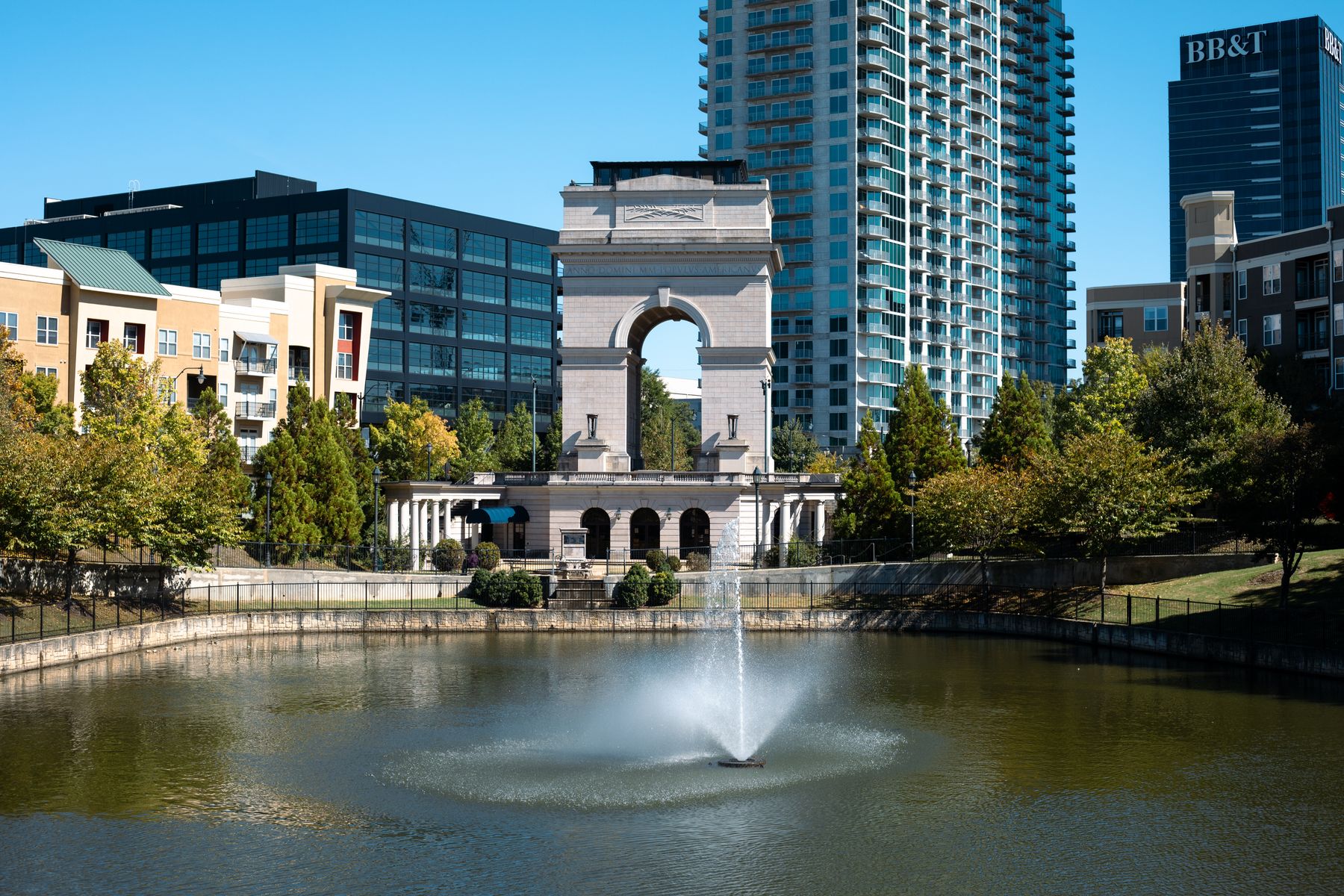

Begin at the Shrine of the Immaculate Conception on Central Avenue downtown, a Roman Catholic church whose twin towers have overlooked the city since the 1870s rebuilding after the Civil War. It sits within walking distance of the Peachtree Center MARTA station, which makes it an easy first stop. Services are open to the public; sightseeing visits are better on weekday mornings, and the parish asks that you not wander during Mass. Photography inside is limited, so plan on exterior shots and a quiet look at the sanctuary from the rear pews.
Start With the Churches That Anchor Their Neighbourhoods
Begin at the Shrine of the Immaculate Conception on Central Avenue downtown, a Roman Catholic church whose twin towers have overlooked the city since the 1870s rebuilding after the Civil War. It sits within walking distance of the Peachtree Center MARTA station, which makes it an easy first stop. Services are open to the public; sightseeing visits are better on weekday mornings, and the parish asks that you not wander during Mass. Photography inside is limited, so plan on exterior shots and a quiet look at the sanctuary from the rear pews.
A short ride east, the Martin Luther King Jr. National Historical Park includes Ebenezer Baptist Church on Auburn Avenue, where Dr King preached and where the visitor experience is now managed by the National Park Service. The newer sanctuary across the street hosts regular services. Entry to the park sites is free, but timed parking near Auburn Avenue and Jackson Street fills on weekends, so arriving before 10am helps. Sunday worship draws a large congregation, and visitors are welcome as respectful guests rather than as a tour group.
Oakland Cemetery and the Victorian Garden Tradition
Oakland Cemetery in Cabbagetown, bounded by Martin Luther King Jr. Drive and Oakland Avenue, is the city's oldest surviving burial ground and the one place here worth scheduling a whole morning for. Founded in 1850, it holds the graves of author Margaret Mitchell and golfer Bobby Jones, plus several thousand Confederate and Union-era plots in a rolling, terraced landscape. Grounds are open daily from dawn to dusk and there is no admission charge. The visitor centre offers maps, and guided walking tours, when scheduled, are modestly priced; check the cemetery's own calendar rather than assuming a fixed fee.
Hilly, shaded and full of magnolias and oaks, Oakland is loveliest in March and April when dogwoods bloom, and again in late October. Paths are uneven and some slopes are steep, so sturdy shoes matter more than any other preparation. Cyclists use the perimeter roads, so keep to the marked lanes. Nearby, the Krog Street Tunnel and the BeltLine Eastside Trail give you an easy walk back toward Inman Park, where several cafes make a good post-visit stop. I would pair Oakland with the MLK park in one day and leave the afternoon free.
Westview, Decatur and the Suburban Cemeteries
Westview Cemetery, off Westview Drive in southwest Atlanta, is one of the largest municipal-style cemeteries in the Southeast and a study in landscape design rather than a tourist attraction. It is quiet, sprawling and best reached by car; from downtown the drive is roughly fifteen minutes outside rush hour. There is no formal visitor programme, so go with a specific grave or a general interest in Victorian monument carving in mind. Weekday mornings are calmest, and gates close in the early evening, so do not plan a late stop.
If you want a second historic church without crossing the city twice, consider Decatur, about twenty minutes east of downtown by car or a direct MARTA ride on the Blue Line to Decatur station. The Decatur Presbyterian Church and the old courthouse square give the area a compact, walkable historic core. Treat Decatur as an add-on rather than the centrepiece. For a hotel base, I would choose downtown or Midtown over the suburbs: both put you within a short ride of Oakland, Auburn Avenue and the Central Avenue churches, with MARTA covering the gaps.
Practical Timing, Manners and Where to Stay
Atlanta's summer heat is the single biggest constraint on this kind of sightseeing. June through August afternoons regularly push past 32C with high humidity, so schedule cemetery visits for the first two hours after opening and churches for mid-morning. March to May and September to November are far more comfortable. Rain is common in July and August, often as short afternoon storms. Cherry Street and Auburn Avenue have limited covered shelter, so carry water and a light layer even in spring.
Etiquette is straightforward: dress modestly for services, stay out of cordoned areas in cemeteries, do not touch headstones or monuments, and keep voices low near active burial sites and in sanctuaries. Do not photograph congregants without permission. Skip the Confederate memorial carving at Stone Mountain on the eastern edge of the metro area if you want an uncontroversial historical outing; it is a forty-minute drive from downtown and not part of the city's church and cemetery story. Book a hotel in downtown, Midtown or Inman Park and you can reach nearly everything above in under twenty minutes.
"Historic Churches and Cemeteries in Atlanta: A Visitor's Guide" was written by the people who run AirFair Atlanta and is published as they wrote it, in November 2026. It is in 4 parts: Start With the Churches That Anchor Their Neighbourhoods, Oakland Cemetery and the Victorian Garden Tradition, Westview, Decatur and the Suburban Cemeteries and Practical Timing, Manners and Where to Stay.
Read the method ↗