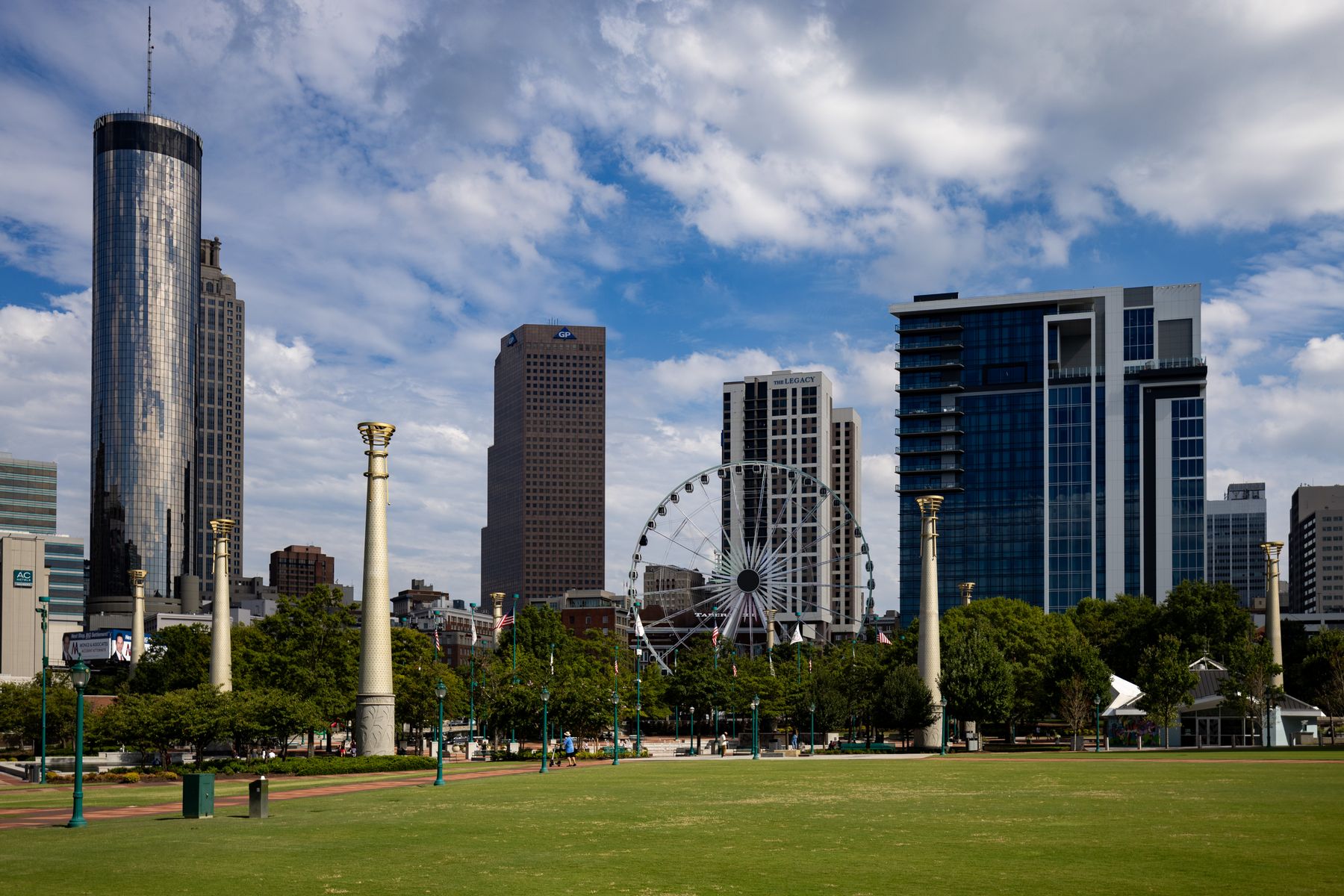

Most visitors aim straight for Downtown or Midtown, and that is where parking decisions matter most. Surface lots around Peachtree Street, Centennial Olympic Park and the Georgia World Congress Center run roughly $10 to $25 on ordinary days but jump sharply when the Falcons, United or a major convention are in town. Metered street spaces downtown are enforced Monday to Saturday, generally until early evening, and several blocks near State Farm Arena switch to event pricing. If your hotel charges a nightly parking fee, compare it with the deck next door before you commit — the difference is often a few dollars a night, not a few tens.
Downtown and Midtown: decks, meters and the event-day trap
Most visitors aim straight for Downtown or Midtown, and that is where parking decisions matter most. Surface lots around Peachtree Street, Centennial Olympic Park and the Georgia World Congress Center run roughly $10 to $25 on ordinary days but jump sharply when the Falcons, United or a major convention are in town. Metered street spaces downtown are enforced Monday to Saturday, generally until early evening, and several blocks near State Farm Arena switch to event pricing. If your hotel charges a nightly parking fee, compare it with the deck next door before you commit — the difference is often a few dollars a night, not a few tens.
Midtown is easier. The streets around Piedmont Park and the Midtown MARTA station have a mix of metered and free residential blocks, and the large decks serving Colony Square and Atlantic Station rarely fill on weekdays. Atlantic Station itself has a useful quirk: short stays are often free or heavily discounted, which makes it a good base for a shopping-and-dining evening. For a leisure trip I would book a Midtown hotel with self-parking included and use MARTA or walking for the headline sights rather than moving the car repeatedly.
Buckhead, the airport and the perimeter
Buckhead suits drivers who want space. Hotels along Peachtree Road and Lenox Road typically include or discount self-parking, and the malls at Lenox Square and Phipps Plaza offer free decks — a genuine advantage over Downtown. The trade-off is distance: from Buckhead it is roughly 20 to 30 minutes to Downtown without traffic and considerably longer at rush hour, when the Downtown Connector (Interstates 75 and 85) crawls. If your itinerary is heavy on the Georgia Aquarium, the World of Coca-Cola and Mercedes-Benz Stadium, staying in Buckhead and driving in each day is usually the wrong call.
Near Hartsfield-Jackson, airport-area hotels cluster along Virginia Avenue and Old National Highway, and most offer park-and-fly packages that bundle a night with a week of parking. That is worth considering if your trip begins with an early flight. Off-airport lots on Camp Creek Parkway and Riverdale Road are generally cheaper than the airport decks, but allow extra time for shuttles. If you are staying in town rather than flying out, skip the airport corridor entirely — it is a long, unlovely drive from anything you came to see.
Decatur, the BeltLine and the residential east side
The east side rewards drivers who accept that parking is residential. Around Decatur Square, street parking is metered and enforced, with free decks a short walk away; the Decatur MARTA station makes it easy to leave the car for a Downtown day. Along the Atlanta BeltLine Eastside Trail, parking near Krog Street Market and Ponce City Market is tight at weekends and often costs $10 to $20 in nearby lots. Arrive before 10am on a Saturday or use a rideshare from your hotel for the trail and dinner, which is what I would do.
Neighbourhoods such as Inman Park, Virginia-Highland and Candler Park have permit zones on side streets, and visitors do get ticketed. Read signs carefully — Atlanta's parking enforcement is active and fines are not trivial. For a first Atlanta trip of three or four nights, I would book a hotel in Midtown or Decatur with included parking and drive only for day trips: to Stone Mountain, roughly 30 to 40 minutes east, or to the Chattahoochee River parks north of the city. Spring and autumn are the pleasant months for that; July afternoons are punishing.
Rules worth knowing before you park
Atlanta tows aggressively from private lots, and the warning signs are not always where you expect. Never leave a car in a lot marked for a specific business and walk away — several downtown operators use licence-plate scanning and cameras, and the tow happens fast. Handicapped spaces and fire lanes are enforced without leniency. If you use a payment app for street meters, keep the receipt; disputes over meter time are common enough that proof helps. Also note that many Downtown decks close overnight or charge an in-and-out fee, so confirm hours before an evening out.
Fuel up before returning a rental car. Stations near the airport on Virginia Avenue and Loop Road are convenient but priced higher than suburban stations; filling up in Decatur or Buckhead on your way saves a little. Car washes are not usually required by rental firms here. Finally, budget for parking as a real line item: on a four-night trip with a rental car, garage and hotel parking can easily rival a meal or two, so choosing a hotel with included parking is the single easiest saving available.
"Driving Into Atlanta: Parking Rules Visitors Should Know" was written by the people who run AirFair Atlanta and is published as they wrote it, in November 2026. It is in 4 parts: Downtown and Midtown: decks, meters and the event-day trap, Buckhead, the airport and the perimeter, Decatur, the BeltLine and the residential east side and Rules worth knowing before you park.
Read the method ↗